Children's Product Compliance on Amazon: Q&A With QIMA and Goat Consulting
Selling children's products on Amazon comes with unique compliance risk, high documentation demands, and serious safety implications for families and brands. When sellers understand children's product rules and prepare the right testing and paperwork, they protect their account health, reduce costly takedowns, and keep end customers safe. Failing to manage compliance can lead to listing suspensions, inventory holds, and product liability exposure that can derail even a well-run Amazon business. In this post, Eric Sutton, Operations Manager at Goat Consulting, and Christopher Sidote from QIMA have a structured conversation that covers core documentation, category-specific nuances, gray areas in Amazon classification, and the logistics of testing and CPC management.
Core Documentation Requirements
What documentation must be submitted for a children's toy product to achieve full compliance on Amazon, and in what order should these documents be prepared?
Children's Product Certificate (CPC) is the master compliance document. This is for the US.
Test Reports that support every claim in the CPC (ASTM F963, 16 CFR Part 1307, etc.).
Declaration of Conformity (DoC) if required by the specific standard. This is for Europe.
Labeling and packaging proof (e.g., age grading, warning statements).
Prepare the CPC first, then attach the supporting test reports and any supplemental declarations before uploading to Amazon's compliance portal.
How do you structure a CPC to avoid Amazon rejection, particularly regarding ASTM F963 sections versus 16 CFR Part 1307?
Let an Amazon Approved lab (like QIMA) create the CPC for you that fulfills the requirements.
What are the most common formatting errors in CPCs and test reports that cause automatic rejection by Amazon's compliance systems?
Missing lab accreditation number (e.g., ISO 17025) because Amazon can't verify third‑party testing.
Inconsistent date formats (MM/DD/YYYY vs. DD/MM/YYYY) cause parsing algorithms to fail.
Blank "Remarks" cells or missing Pass/Fail status because the system expects an explicit outcome.
Use of non‑standard fonts or embedded images vs selectable text because OCR cannot read the data.
CPC is not in PDF/A (searchable PDF) format, so the upload validation fails.
Test report titles that do not match CPC reference numbers cause a cross‑reference mismatch.
Category-Specific Requirements
For products with multiple variations, what is the minimum testing scope required?
For most product assortments, each variation should be submitted for testing, and the lab will group products together to minimize cost. For example, if a product assortment includes a blue plastic that is used across multiple products, we can conduct chemical testing on the plastic once and transfer those test results to all of the products in the assortment that utilize that same plastic.
Should compliance documents for multiple standards be combined into a single test report or submitted separately?
Multiple test results and data can be on the same report for review. It doesn't need to be on separate reports for compliance.
How do testing requirements differ between plush toys, plastic action figures, wooden puzzles, and battery-operated electronic toys?
Testing requirements differ because each toy type presents distinct safety risks. In short, testing is driven by the appropriate age for the toy, the materials used, how the toy is constructed, and how the toy may be used or misused by the child.
For art materials marketed to children, what additional testing beyond ASTM F963 is required under the LHAMA?
Per the Labeling of Hazardous Art Materials Act (LHAMA), art materials marketed to children must be evaluated for potential chronic toxicity via dermal contact, ingestion, and inhalation, as well as for corrosiveness, irritation to the skin and eyes, and the potential to be sensitizers. This evaluation is performed by a Board Certified Toxicologist.
How do compliance requirements change for products intended for children ages 13-14 versus 12 and under?
Products for children 12 and under require a CPC, ASTM F963 testing (for toys), Federal Hazardous Substances Act (FHSA) testing, and CPSIA testing.
Products for children 13-14 do not require a Children’s Product Certificate or mandatory testing by federal law if the product is clearly not a "children's product" designed and intended for children age 12 or younger. However, the ASTM F963 standards for children's toys does apply to products for up to 14 years of age.
Avoiding Classification Pitfalls on Amazon
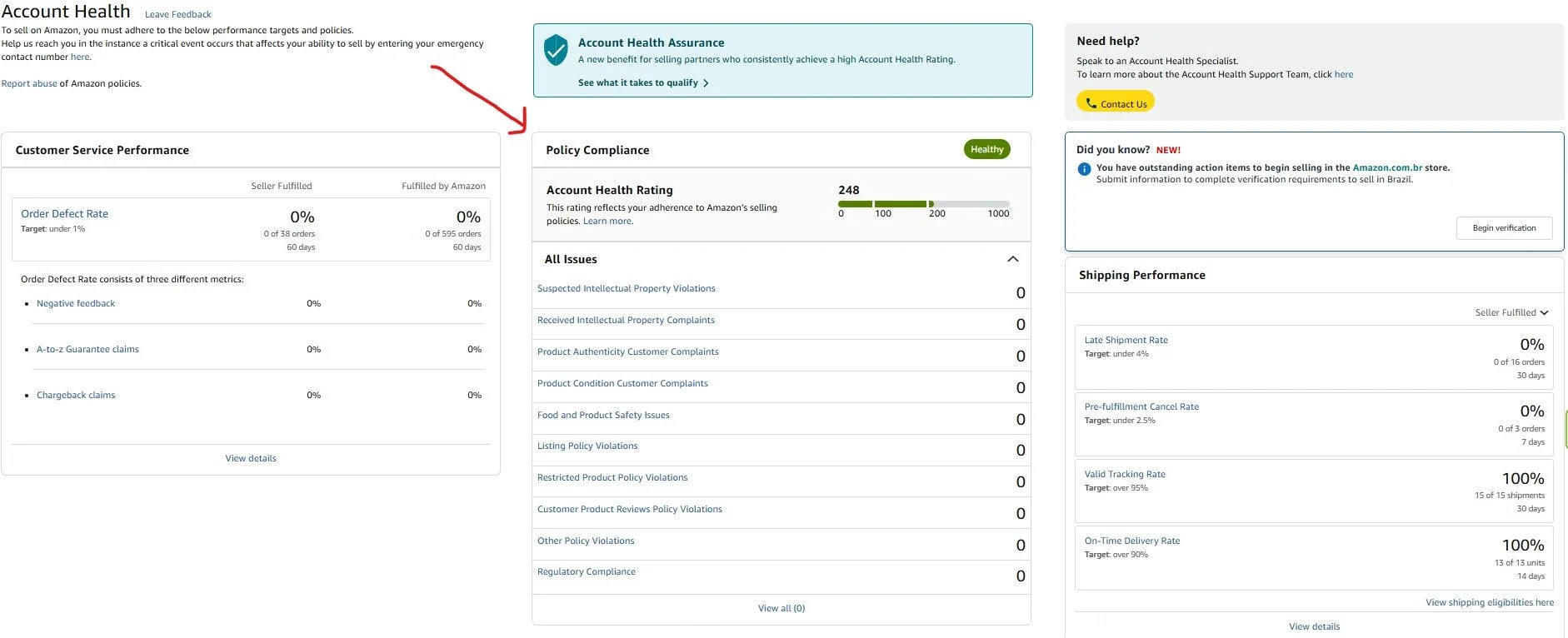
What is the most effective escalation path when Amazon incorrectly classifies a product as a children's toy?
Using the appeal request platform on Seller Central. Sellers can use it if their item has been falsely flagged as a toy or incorrectly classified.
If a product is used by both children and adults, what language and marketing positioning should be used to avoid children's product designation?
If a product is truly designed and intended for children ages 12 and under, there should be no labeling or marketing that attempts to "avoid" a children's product designation. Authorities in any region of distribution will expect products to be safe for children regardless of their marketing and labeling if they consider them children's products. An example of a general use outdoor game, like a Bocce Ball set, could be used by the whole family and therefore not be designated as a children's product as long as it does not include any language specifically referring to children or an appropriate age grade. A product like a board game that is for the whole family and includes an age grade (example 6+) would be expected to meet the safety requirements for a 6+ toy product due to the age grade.
How does Amazon's system handle products where the brand name contains words like "Kids" or "Junior" but the product is not intended for children under 12?
The brand name alone does not trigger CPC; however, if combined with any child-related keyword in the title or description, the algorithm flags it.
Best practice: Keep the brand name but exclude "Kids/Junior" from the product title and bullet points; use a neutral subtitle (e.g., "Premium Bluetooth Speaker, 20 W").
What proactive measures can sellers take during product development to serve family markets without triggering children's product compliance?
If a product is truly designed and intended for children ages 12 and under, there should be no labeling or marketing that attempts to "avoid" a children's product designation. Authorities in any region of distribution will expect products to be safe for children regardless of their marketing and labeling if they consider them children's products. Refer to the question above on dual-use products.
Testing Logistics, Timelines, and Remediation
How long should sellers budget from initial sample submission to receiving a compliant CPC?
Standard turnaround: 7 business days for initial testing and report generation.
CPC preparation and upload: 2-3 days (handled by QIMA).
Potential retest: add 5-7 days per failure.
What sample requirements does QIMA need for testing?
All samples should be representative of the final production run (same material, color, packaging). Requirements for quantity and preparation are based on the individual product.
For sellers sourcing from China, when in the production timeline should testing be conducted?
Safety and compliance testing should be top of mind throughout the production timeline.
Phase 1, Prototype testing: Validate design safety early; catches major issues before tooling.
Phase 2, In-line (mid-production) sampling: Test a pre-production batch to confirm consistency.
Phase 3, Final production sampling: Required for the CPC; submit the first commercial lot.
A two-stage approach (prototype + final sample) balances risk and cost.
What are the most common test failure points, and what rapid remediation strategies can factories implement?
Referring to toys and children's products, most common failures are due to labeling, chemical noncompliance and small parts. For labeling, the lab will identify what the concern is and clients can submit revised label copy for review to ensure it complies. For chemical failures, clients can source compliant components and submit those for retesting to ensure they comply before producing more product. Small parts failures may be more challenging to rectify as they may be due to different factors, including materials and construction. In these cases, QIMA subject matter experts can review the issue and in some cases suggest changes that result in a compliant product.
Ongoing Compliance and Multi-Marketplace Management
Can a single test report cover Amazon US, Canada, and EU marketplaces, or are separate tests required?
A single test report can be issued that covers multiple jurisdictions.
What constitutes a "material change" that requires retesting under CPSIA?
Per the CPSC, a material change is a change that the firm makes to their product's design, to the manufacturing process, or to the source of component parts for the product, which could affect the product's ability to comply with the applicable requirements. Changing suppliers does factor into the determination of whether there is a material change. Minor packaging changes do not, unless the packaging is meant to be retained with the children's product (example: a box that is retained to store a children's game).
Document any supplier or material change; QIMA will advise if a fresh test is needed.
For sellers with large catalogs (100+ children's product ASINs), what compliance management tools does QIMA recommend?
QIMA's Compliance Dashboard: Central hub showing each SKU's CPC status, test report expiry, and upcoming renewal windows.
Automated alerts (email/SMS) 30 days before a CPC expires.
Bulk upload template for Amazon that includes CPC reference numbers per ASIN.
Version control: keep a master spreadsheet linked to the dashboard for audit trails.
How do small batch manufacturer exemptions under CPSIA work in practice?
Per the CPSC, a firm qualifies as a Small Batch Manufacturer if:
The firm's total gross revenue from the prior calendar year from the sale of all consumer products is $1,436,864 or less.
No more than 7,500 units of a covered product were manufactured in the previous calendar year.
To take advantage of potential testing relief as a Small Batch Manufacturer, and to ensure products comply with all applicable CPSC safety requirements, firms should consider the following steps:
Check the Small Batch Manufacturer qualification requirements.
If you qualify, you must register as a Small Batch Manufacturer on SaferProducts.gov.
Recertify annually to continue receiving potential testing relief as a Small Batch Manufacturer.
Determine which requirements for each children's product fall into Group A and Group B. Small Batch Manufacturers do not receive any relief from Group A requirements but may be able to receive relief for applicable Group B requirements.
What emerging regulatory changes should children's product sellers prepare for in 2026?
For the US:
Filing: Mandatory electronic filing (eFiling) for Children's Product Certificates and other regulated consumer products begins on July 8, 2026.
Safety Standard for Toys, Water Beads: Requirements for Water Beads go into effect on March 12, 2026. This new rule sets size limits for water bead expansion, limits for acrylamide content, and new labeling requirements.
Safety Standard for Toys, Neck Floats: Requirements for Neck Floats become effective June 15, 2026. This rule includes requirements to address drowning, strangulation, and suffocation hazards. Products must meet strict performance tests, like buoyancy, leak resistance, and secure fit, and also include a warning that indicates the product does not prevent drowning and that adults must stay within arm's reach of the child.
Keeping Products Live and Your Brand Protected
Children's product compliance on Amazon is not just a paperwork exercise; it is a structured system of testing, documentation, and listing practices that determine whether your products stay live and your brand stays protected. By building compliance into product development, working with an Amazon-approved lab like QIMA, and maintaining clean CPCs, test reports, and labels, sellers can reduce suspensions, avoid costly relabeling, and deliver safer products to families. Ignoring these requirements can trigger automated rejections, repeated test failures, and enforcement from both Amazon and regulators that jeopardize revenue and future catalog expansion. If you want expert help navigating Amazon's children's product rules, interpreting CPC and test documentation, or responding to Amazon compliance flags, reach out to Goat Consulting to have an experienced team manage this part of your business.
About the Author
Eric is the Operations Manager of Goat Consulting and is thankful for the opportunity to work with and learn from manufacturers and retail brands of varying sizes and categories. Eric recognizes that the Amazon marketplace can be a complex environment where merchandising and distribution can be impacted by a variety of factors and parties. He enjoys helping our clients gain a better understanding of their brand's current position in the marketplace and finding creative ways to implement the client's ideal brand image. If you have a question about Account Health or Children’s Product compliance, Eric can help identify what factors may be impacting the publication of the content and provide instructions on how to improve the rate of correct display. If you have any questions or need assistance with improving your brand's image on Amazon or Amazon compliance services, please reach out using the contact form.