Amazon Section 3 Violation: What It Means and How to Appeal
This post covers what an Amazon Section 3 violation is, why Amazon deactivates seller accounts under Section 3 of the Amazon Services Business Solutions Agreement, and how to put together an appeal that gets your account reactivated. If you're reading this because a deactivation notice landed in your inbox, you're in the right place. Your listings are down, your funds are probably on hold, and the notice itself likely raised more questions than it answered. The goal of this post is to walk you through what happened and what to do next, in order.
Here's the short version. A Section 3 violation means Amazon has deactivated, or is threatening to deactivate, your entire selling account under the termination rights in its Business Solutions Agreement, the contract every seller accepts at registration. It's an account-level enforcement rather than a single listing takedown, and it's most often tied to related accounts, identity verification problems, review manipulation, authenticity complaints, or suspected fraudulent activity. Most Section 3 deactivations can be appealed, and the quality of your first appeal matters more than how fast you send it.
What Is an Amazon Section 3 Violation?
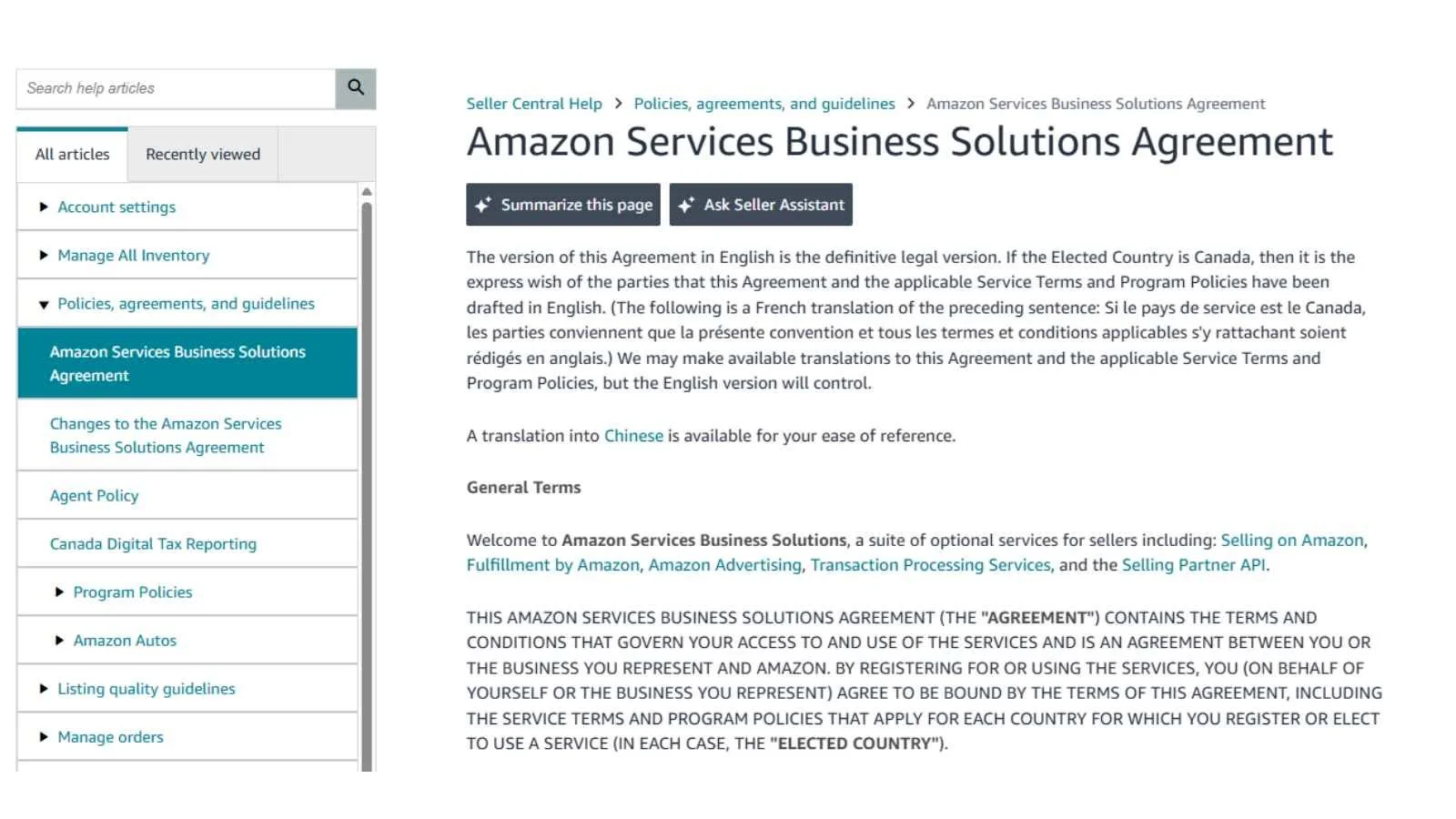
An Amazon Section 3 violation is a breach of Section 3 of the Amazon Services Business Solutions Agreement, the section of the seller contract that gives Amazon the right to suspend or terminate a selling account. When a deactivation notice cites Section 3, it means the account itself has lost selling privileges, not just one product listing.
Every seller agrees to the Amazon Services Business Solutions Agreement during registration, and it stays in force for as long as you sell. Section 3 is the term and termination portion of that agreement, and it spells out three ways Amazon can end or pause the relationship. Amazon can terminate for convenience with 30 days' notice. Amazon can suspend or terminate an account for a breach the seller fails to cure within 7 days of a cure notice. And Amazon can act immediately, with no notice at all, when it believes an account has exposed Amazon to liability, has been used for deceptive, fraudulent, or illegal activity, or has harmed customers, other sellers, or Amazon's legitimate interests.
That third category is where most Section 3 deactivations live, which is why they usually arrive without warning. One day the account is fine, and the next day there's a notice that starts with something like "Your Amazon seller account has been deactivated in accordance with Section 3 of the Amazon Services Business Solutions Agreement."
It's worth being clear about scope before going further. If Amazon removed one of your listings over a policy complaint, that's a listing-level issue with its own process, and we cover it in our guide on how to write an effective Amazon appeal to reinstate a product listing. A Section 3 notice is the account-level version, and the stakes, the documentation, and the review process are all heavier.

Why Amazon Deactivates Accounts Under Section 3
The frustrating part of a Section 3 notice is that it often doesn't say exactly what you did. Amazon cites the contract section rather than the specific behavior, partly because the agreement is what gives it the legal footing to act. In our experience, nearly every Section 3 deactivation traces back to one of six root causes.
Related account enforcement. This is the most common trigger we see. Amazon connects accounts through shared addresses, bank accounts, tax information, devices, network connections, and people. If your account is linked to another account that was deactivated, yours can inherit that enforcement even if your own metrics are clean. A former business partner, an employee who once had login access, or a family member's old account can all create the connection.
Multiple selling accounts without a legitimate business need. Amazon permits more than one account only in limited circumstances, such as separate businesses with separate inventory and banking. Operating a second account as a hedge or a backup is exactly what this rule exists to catch.
Identity or business information Amazon couldn't verify. If your legal entity name, address, bank account, or tax details don't match your documents, or you miss a re-verification request, Amazon treats the account as unverified. We covered the recurring version of this in our post on verifying Amazon account information under the INFORM Consumers Act, and missed INFORM deadlines still feed directly into Section 3 deactivations. Buying a business that already sells on Amazon creates the same connection the day the ownership records link, which is why our guide to transferring a seller account after an acquisition starts with a related-accounts check.
Review or ranking manipulation. Paying for reviews, running review swaps, inserting cards that offer rewards for five stars, or hiring a service that promises ranking jumps all fall here. Amazon treats manufactured social proof as a direct attack on customer trust, and it enforces at the account level.
Authenticity and condition complaints at scale. A single inauthentic claim is usually a listing problem. A pattern of them across your catalog becomes an account problem. We walk through the listing-level version in our post on the Amazon Product Authenticity and Quality Policy, and the sourcing documentation it describes is the same evidence a Section 3 appeal leans on.
Suspected deceptive, fraudulent, or illegal activity. This is the broadest bucket and the one most often triggered by algorithm rather than by a human. Sudden sales velocity spikes, tracking numbers that don't match carriers, dropshipping setups that violate the drop shipping policy, and mismatched invoices can all flag an account before anyone at Amazon looks at it.
The throughline in all six is the customer. Amazon's position is that a customer should be able to buy from a stranger on the internet with total confidence, and Section 3 is the mechanism it uses when it believes an account puts that confidence at risk. Understanding which of these buckets you're in is the single most important step in your appeal, because an appeal aimed at the wrong root cause reads as evasive even when it's sincere.
How to Read Your Section 3 Deactivation Notice
Before you write anything, read the notice slowly and pull out three things. First, look for any policy named alongside Section 3, because that's your root cause bucket. Language about "an account you are not allowed to operate" points to related accounts. A request to confirm your identity or business documents points to verification. A reference to "deceptive or illegal activity" usually means the fraud systems flagged something. Second, note exactly what Amazon is asking you to provide, because appeals that ignore the requested documents rarely go anywhere. Third, find the funds language, which typically explains that Amazon will hold your balance while it reviews your account, and what your options are after 90 days.
One piece of advice we give every seller in this position: don't fire off an emotional appeal the same day the notice arrives. Amazon weighs your first substantive response heavily, and a rushed paragraph about how unfair the situation is spends that first impression without moving your case forward. Take a day, figure out your bucket, and build the appeal properly.
How to Appeal an Amazon Section 3 Violation
The appeal itself is a documentation exercise. Amazon isn't looking for an apology, and it isn't moved by how long you've been selling. It wants a factual account of what happened and evidence that the underlying issue is fixed. Here's the sequence we follow when we take on a Section 3 case at Goat Consulting.
Identify the root cause honestly before you write. Match the notice language to one of the six buckets above, then audit your own operation. Ask the uncomfortable questions. Did anyone on your team ever have a previous account? Did you change banks, addresses, or entities without updating Seller Central? Did a supplier change on a top seller? The appeal can't work if it's aimed at the wrong problem.
Gather documents that prove the story. Depending on the bucket, that usually means a government ID for the primary contact, a business license or formation document, a utility bill matching the address on file, bank statements, supplier invoices covering the last 365 days, and carrier-level tracking records. Consistency matters more than volume here. Five documents that all show the same legal name and address beat twenty that don't quite line up.
Write your plan of action. This is the heart of the appeal, and the structure Amazon expects is covered in the next section.
Submit through the path in your notice. For most sellers that's the Reactivate your account button on the Account Health page in Seller Central, which opens the submission flow for your explanation and attachments. Use one channel and keep everything in one thread, because parallel submissions through different routes slow the review down and can put contradictory statements on the record.
Respond to follow-ups quickly and completely. Amazon may ask for more documents, and for identity-related cases it increasingly asks sellers to complete a video verification call. Treat these requests as the review moving forward. Have your original documents on hand and make sure the person on camera is the primary contact on the account.
If the appeal is rejected, revise before you resubmit. A denial usually means the reviewer didn't see the evidence they needed, not that the case is closed. Resubmitting the same text gets the same answer. Each new submission should add a document, close a gap, or state a fact more plainly than the last one.
On timelines, straightforward verification cases can resolve in a few days, while related-account and fraud-flag cases routinely take weeks and more than one round. The variable you control is completeness. Accounts that submit the full picture once tend to move faster than accounts that drip out documents across five exchanges.
The Plan of Action Structure Amazon Expects
A plan of action for an Amazon Section 3 case has three parts, and reviewers look for all three. The root cause section states specifically what happened, in plain factual language, and takes ownership where ownership is due. The corrective action section describes what you've already done about it, with dates. The preventive measures section explains the process changes that keep it from recurring, such as a single documented account structure, supplier vetting steps, or a monthly review of your account information.
Because this is an account-level appeal, write about the account, not about one product. Skip the emotion, skip any criticism of buyers or of Amazon, and keep it short enough that a reviewer can absorb it in one pass. Bullet points and dates beat paragraphs of narrative. We break down plan of action writing in more depth, including examples of language that works, in our post on writing an effective Amazon appeal, and the same principles apply at the account level with higher stakes.
What Happens to Your Funds and Inventory After a Section 3 Deactivation
A Section 3 deactivation stops disbursements, and for many sellers the held balance hurts more than the lost sales. In most cases, Amazon holds your funds while it reviews the account, and if you don't get reinstated you become eligible to request disbursement roughly 90 days after the deactivation date. Your notice includes instructions for that request through Amazon's disbursement appeal process. Amazon can hold funds longer when it believes it's covering fraud exposure or expected customer claims, which is one more reason the appeal itself is worth doing well even if you've decided not to keep selling.
Your inventory sitting in Amazon fulfillment centers doesn't disappear. You can generally still create removal orders to get inventory shipped back to you while the account is deactivated. The right call depends on where the appeal stands. Removals take time and carry fees, and if reinstatement looks likely, pulling your stock means restarting with empty inventory the day you're reactivated. If the appeal has stalled, retrieving sellable inventory protects the cash tied up in it. Either way, download your business reports, statements, and tax documents early, while everything is easy to reach.
How to Prevent Section 3 Violations
Almost every Section 3 case we've worked on was preventable, and prevention costs a fraction of what a deactivated month costs. The habits that matter most map directly to the six root causes.
Keep your account information current before Amazon asks. Bank changes, address changes, entity changes, and tax updates should hit Seller Central the same week they happen, and verification requests, including the INFORM Consumers Act re-verifications, should never sit in your case log for weeks. Run one account per business, and if you believe you have a legitimate need for a second, document the separation of entities, inventory, and banking so you can prove it. Manage team access through User Permissions rather than shared logins, and remove departing employees the day they leave, because stale credentials are a related-account link waiting to happen.
Source from suppliers who can produce real invoices, and keep at least 365 days of purchase records organized, since those invoices are the first thing Amazon requests in authenticity-driven cases. And check your Account Health Rating weekly so policy violations get resolved while they're still listing-level problems. We cover a common example in our post on reinstating a listing from product condition complaints, and the pattern generalizes: violations you address promptly stay small, and violations you ignore stack into account-level risk. Sellers who keep their rating above 250 for six months also qualify for Account Health Assurance, where Amazon typically calls before deactivating over account health issues, though that protection doesn't extend to fraud or illegal activity findings.
Each of these habits comes back to the customer's experience. Accurate account information, clean sourcing, and honest reviews are what let a customer trust the marketplace, and sellers who operate that way rarely hear about Section 3 at all. Risk mitigation is one of the core ways we lead client accounts, and our Amazon compliance services are built around catching these issues before Amazon does.
When to Get Help With a Section 3 Appeal
Plenty of sellers handle a Section 3 appeal themselves, and if your root cause is clear, your documents are clean, and this is your first submission, doing it yourself is reasonable. The cases where outside help earns its fee look different. If the notice cites deceptive or illegal activity and you genuinely can't tell what triggered it, if you're caught in a related-account web you can't map, or if you've already spent a rejection or two, an experienced set of eyes on the appeal usually changes the outcome faster than another solo attempt. At Goat Consulting we've written and managed appeals across a wide range of account health violations, and account rescue work runs through our Amazon compliance services practice. If the held balance is large, or the notice alleges fraud, it's also worth a conversation with an attorney who works on Amazon seller matters, since a small number of these cases end up in formal dispute rather than in the appeal queue.
Frequently Asked Questions - Amazon Section 3
-
Section 3 is the term and termination section of the Amazon Services Business Solutions Agreement, the contract every seller accepts at registration. It gives Amazon the right to suspend or terminate a selling account, with 30 days' notice for convenience, after a 7-day cure period for fixable breaches, or immediately when Amazon believes the account was used for deceptive, fraudulent, or illegal activity or has harmed customers or the marketplace.
-
There's no fixed timeline. Straightforward identity verification cases can resolve in a few days, while related-account and fraud-flag cases often take several weeks and more than one round of submissions. The biggest factor you control is completeness, because appeals that include the full plan of action and all supporting documents in the first submission consistently move faster than appeals that add evidence piece by piece.
-
Most policy violations affect your Account Health Rating for 180 days from the date of the violation, with the impact fading as the violation ages and disappearing once it's resolved or expires. The record of past enforcements doesn't vanish entirely, and a history of repeated violations makes future enforcement more likely, which is why resolving issues promptly matters even after your rating recovers.
-
No, and trying usually makes things worse. Opening a new account while another account is deactivated violates Amazon's multiple account rules, and Amazon's systems link new accounts to old ones through addresses, banking, tax information, devices, and people. The new account typically gets deactivated as a related account, and the attempt itself undermines the credibility of your appeal on the original account.
-
In most cases, yes, though not immediately. Amazon holds your balance while it reviews the account, and if the account isn't reinstated you're generally eligible to request disbursement about 90 days after deactivation through the process described in your notice. Amazon can withhold funds longer when it believes they're needed to cover fraudulent activity, customer claims, or chargebacks, which is another reason a well-documented appeal is worth the effort.
Wrapping Up Amazon Section 3 Violations
A Section 3 violation is Amazon enforcing its Business Solutions Agreement at the account level, and it almost always traces back to one of six root causes: related accounts, multiple accounts, failed verification, review manipulation, authenticity complaints at scale, or a fraud flag. The appeal that works is the one that names the real root cause, proves it with consistent documents, and lays out corrective and preventive steps in a plan of action a reviewer can absorb in one pass. Your funds are usually recoverable, your inventory stays reachable, and your first substantive appeal is your most valuable one, so spend it carefully.
If your account is deactivated right now, your next steps are simple to state and hard to rush. Read the notice and identify your bucket, pull your documents together, write the three-part plan of action, and submit once through the path in your notice. Then answer every follow-up quickly, including video verification if it's requested.
One note on policy and process: Amazon adjusts its enforcement systems, appeal flows, and funds policies regularly, and the details here reflect how Section 3 cases work as of July 2026. Confirm the current process in your own deactivation notice and in Seller Central before acting, and treat this post as practitioner guidance rather than legal advice.
About the Author
This post was written by Reed Thompson, the CEO at Goat Consulting. Reed helps lead the Goat Consulting team and their clients sell on Amazon by increasing sales, mitigating risk, reducing costs, and solving problems. Risk mitigation is one of the four pillars of how Reed and the team lead accounts, and they've worked on appeals and account health issues across dozens of product categories, from single listing takedowns to full account deactivations. If you want help appealing an Amazon Section 3 deactivation or keeping your account out of that position in the first place, or assistance with other aspects of selling on Amazon, please reach out through our Contact Us form.